Augmented Reality (AR) got sold as the future, which is exactly why nobody thought it was for them. The future is something that happens to you, not something you make on a Tuesday on your phone. Most of this job was taking a word that sounded expensive and far away and writing it back down to size, into something a teacher or a kid could actually try. I was the only writer, so there was no house voice to inherit. Whatever Assemblr sounded like, it sounded like that because I decided it did.
The situation
Assemblr was a Bandung startup, under thirty people, building a cross-platform app that let anyone make and share things in AR. I joined in 2018 as the first and only dedicated writer, which meant every word the company put anywhere was mine: the app itself, the website, the blog, the emails, the social, the campaign lines. First real exposure to product work, years before I had the vocabulary for any of it.
Then the product changed. What started as a creative sandbox, a place for hobbyists to build 3D models and AR for fun, turned toward education and marketing: teachers, schools, brands. Same app, mostly, but completely different people on the other end of the copy.
The approach
There were two problems. The first was that AR scared people off before they tried it. The second showed up later, when the product decided to become something else and the words had to follow without snapping the thread. Both got answered by one solution, which is to lead with the human, not the technology.
The voice was the one part of the product that didn't have to be rebuilt when everything else did.
Artifacts
FIG. 01
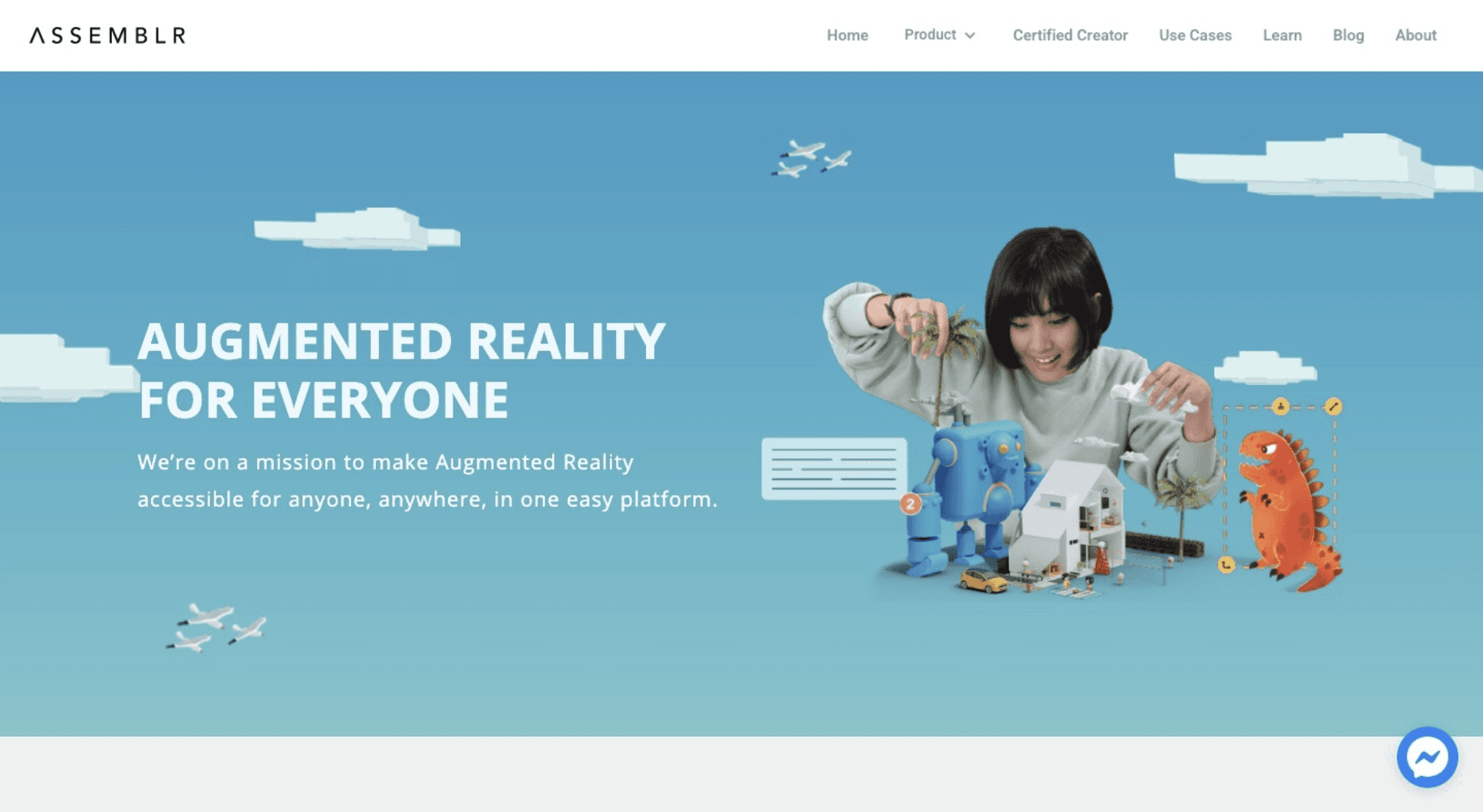
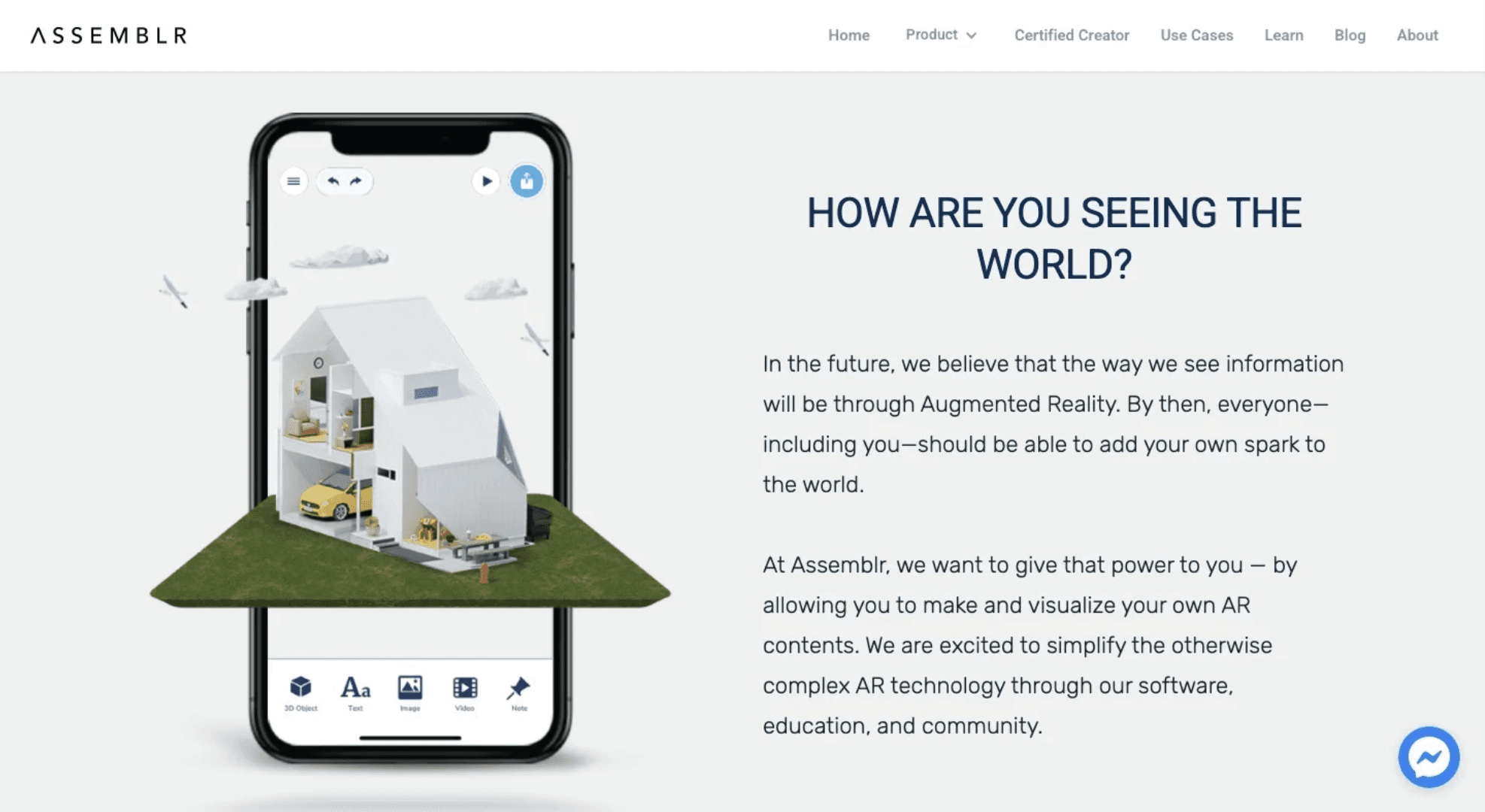
Landing page. "Augmented Reality for everyone", the whole thesis in four words; "How are you seeing the world?" as the opener before the actual product pitch. Future-painting before feature-listing.
FIG. 02
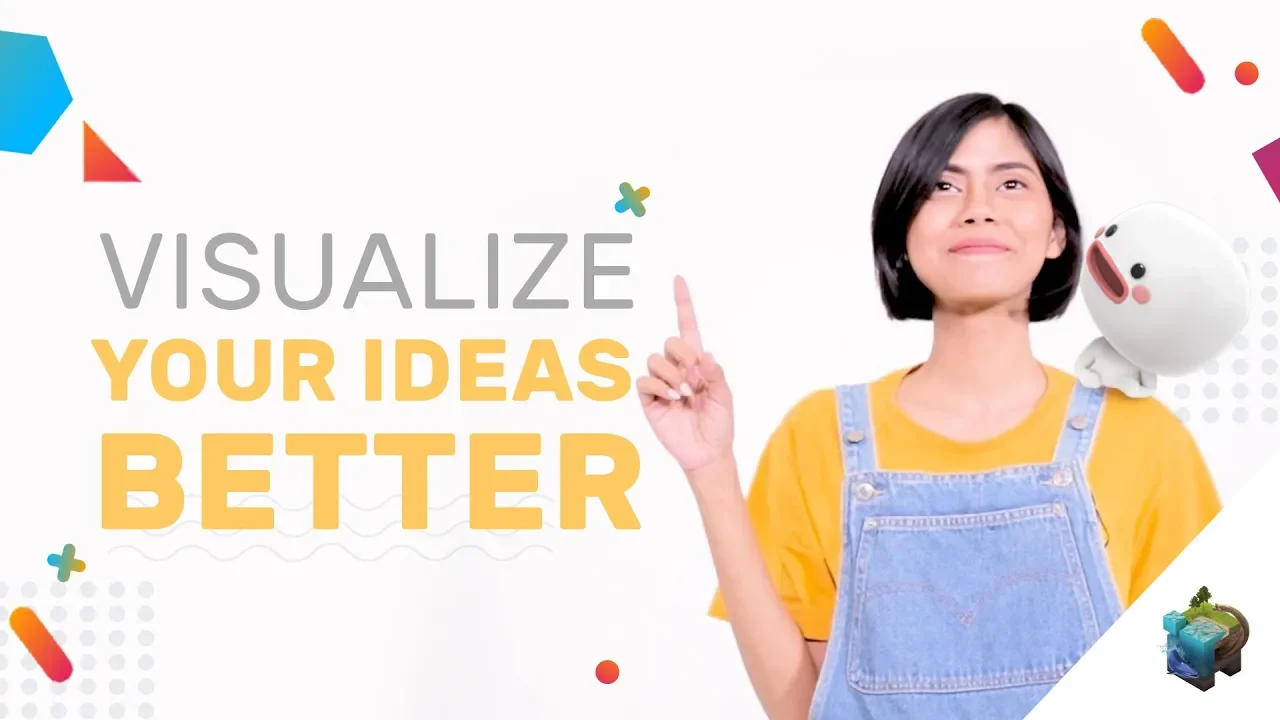
A one-minute commercial built backwards from one frustration, which is having an idea nobody else can see. An exercise in saying the pain point first, the product second. (Yeah, I wrote and acted here.)

The impact
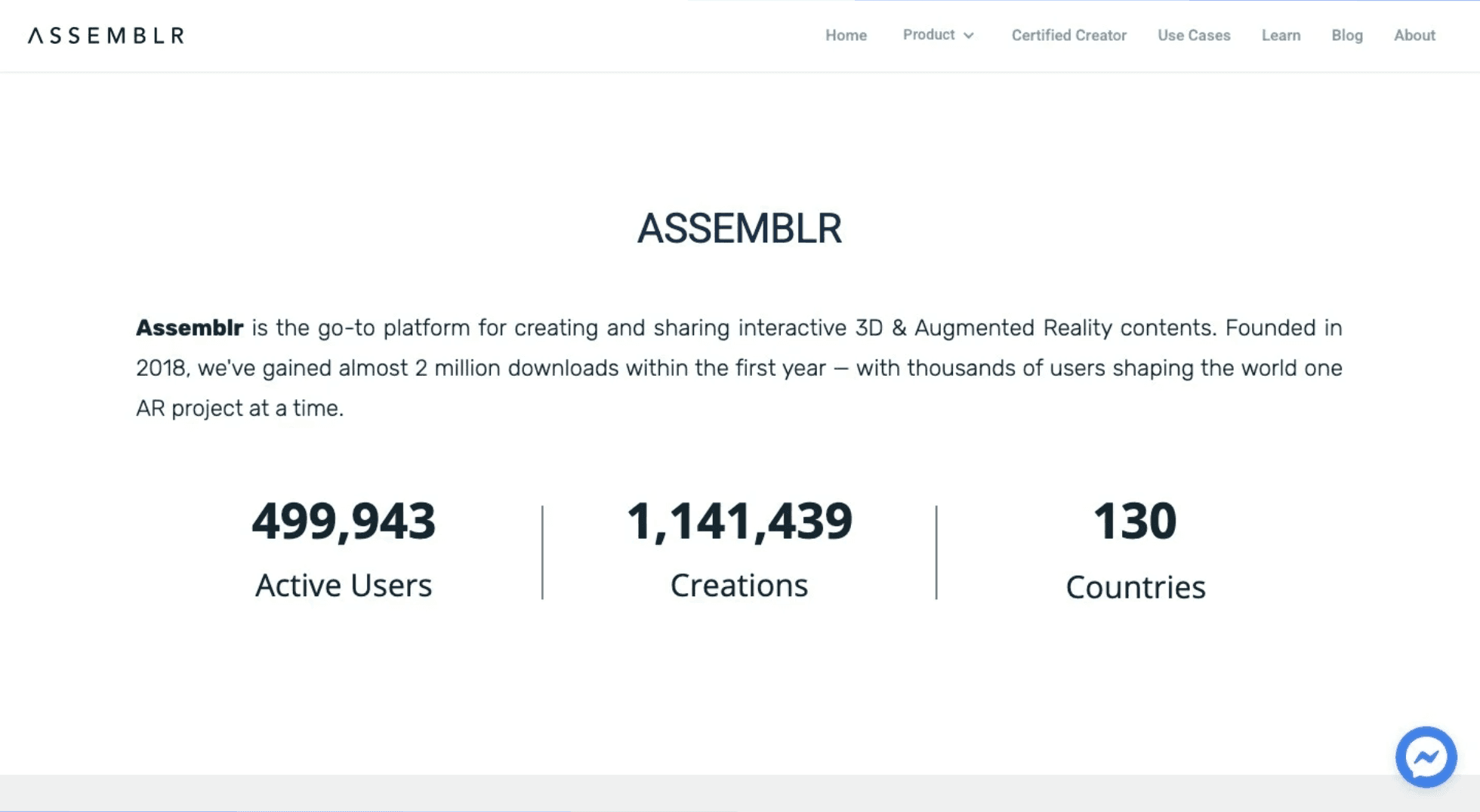
Within its first year the app crossed roughly two million downloads and reached users in around 130 countries. Those are product numbers, not copy numbers, and I wouldn't claim the words did that alone. What the words did was make the front door legible to people who'd have bounced off "AR platform" on sight.
WHAT DIDN'T WORK
It was my first product job and I wrote like it. Plenty of early copy was clever before it was clear, and some of it aged into cringe the moment the product matured. I didn't yet have language for things like information hierarchy or content governance, so a lot of good decisions were instinct I couldn't defend in a meeting. When the pivot hit, I recalibrated tone faster than I documented it, which meant the "why" lived in my head instead of anywhere a teammate could find it later.
WHAT THIS UNLOCKED
This is where the through-line started, before I could name it. Making an intimidating system feel usable to the person standing outside it turned out to be the same job I'd keep doing for the next decade, just with bigger systems and better words for it. It was also where I learned that brand voice isn't a document you print once. It's a living thing shaped by every tiny choice, and it has to survive the product changing underneath it.