Travel Guides was losing organic traffic from search engines. The temptation on a ranking problem is to go SEO-maxxing by injecting more keywords, metadata, technical fixes. What actually moved the needle was sitting with the bounce rate long enough to notice it was pointing at a UX problem.
The situation
Travel Guides is Traveloka's travel destination-page system. One long-form editorial page per destination, written to appear on Google and convert organic readers into bookings.
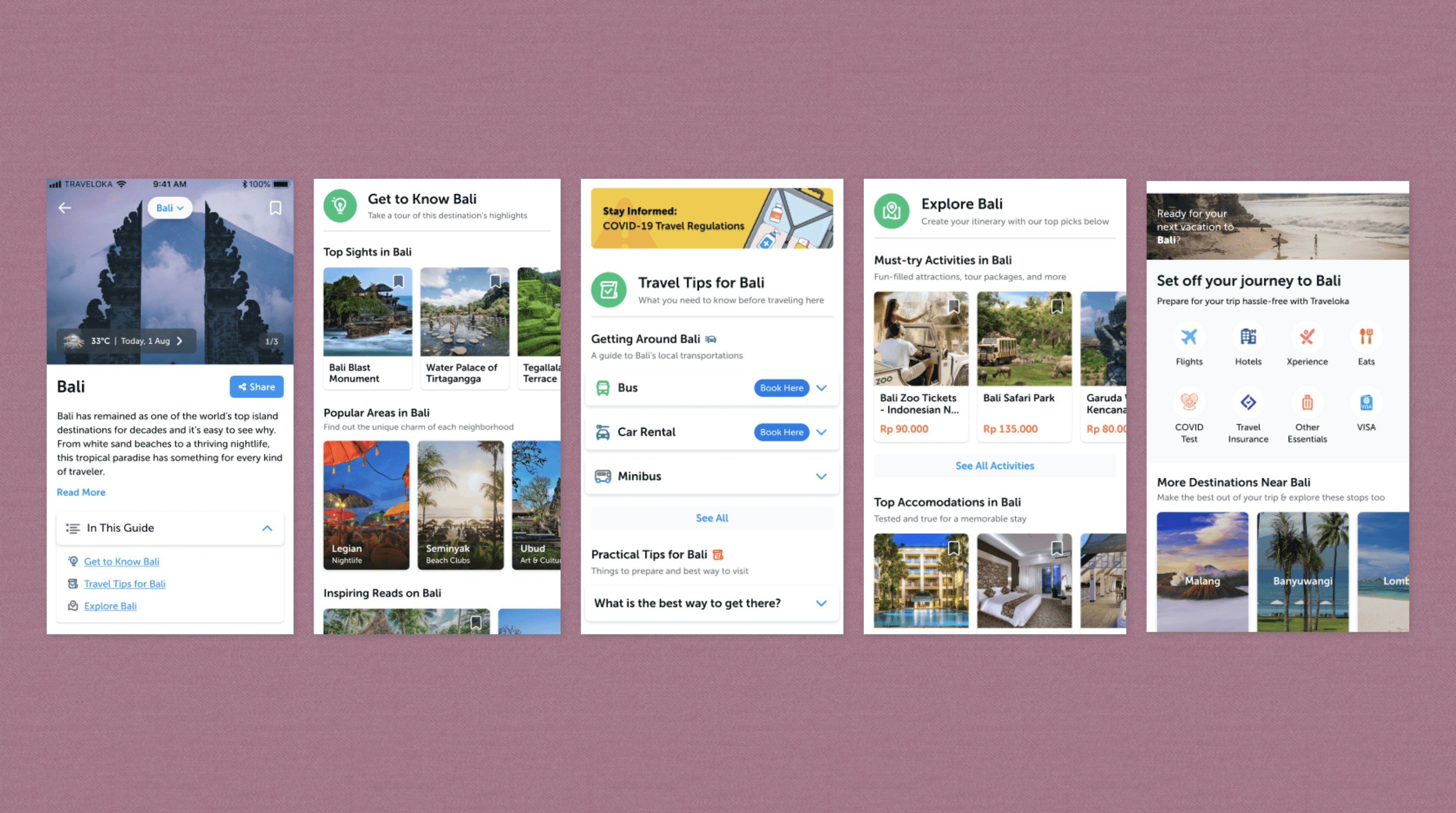
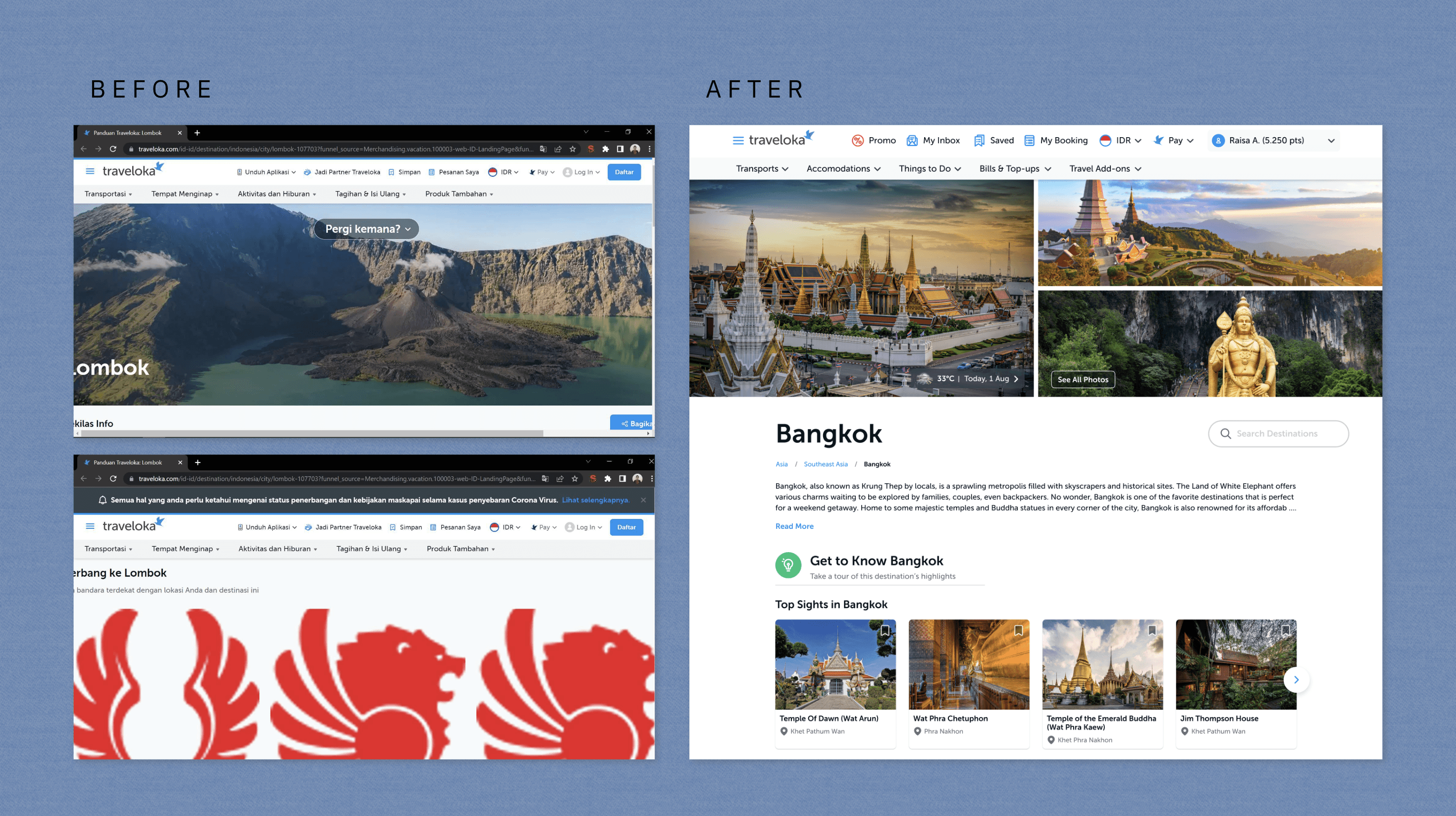
The pages were structured like storefronts. A booking widget at the top, then a few product entry points (Flights, Hotels), then contents like inspirational articles, area highlights, travel tips scattering below them. This arrangement matched the team's internal logic (each business unit owned a slot) more than it matched how anyone reads a page about a city they're considering visiting.
The project started when the SEO team ran an audit and brought their findings to product. I came in as design PIC and split the work into two phases to meet the engineering timeline: mobile first, desktop second with user research attached.
The approach
Users arrived at Travel Guides from a Google search with a soft intent. They wanted to know what Bali was before they wanted to know how to book a flight to it. The redesign rebuilt the page as a sequence, where each section did one job, and the jobs were ordered to match how user intent develops, not how the organization chart is structured.
In a nutshell: arrange the page so each section earns its place, arrange the copy so each label does its job, arrange the brief so writers know why before they know how. The redesigned page wasn't competing for SEO ranking against reader experience; rather, it was answering the same question the search query was asking, in the same order the reader was asking it.
Artifacts
The impact
01
A month after release, average daily visits moved from around 2 per day to 172. The bounce rate dropped enough to lift the pages out of the ranking pit they'd been sitting in. The pattern held across destinations, suggesting the structure, not any single destination's content, was the lever.
02
The project became the working model for cross-team setups after it. Design, SEO, product, and engineering had never worked on the same brief from the start before this one, and the practices that emerged (weighing SEO impact against technical effort as the framing question, deferring component decisions to scoped follow-ups, using shared scoring for alternatives) carried into the next year of platform work.
WHAT DIDN'T WORK
Design had been pushing toward inspirational structure from the start, but the product brief was still transactional, so early sketches had to follow. Product team caught up partway through and shifted positioning. Some sketches got discarded.
Mobile shipped before research, to meet the engineering timeline. Several mobile decisions were assumption-validated, not user-validated. The desktop research surfaced things that worked, but also one or two things that probably should have been tested earlier.
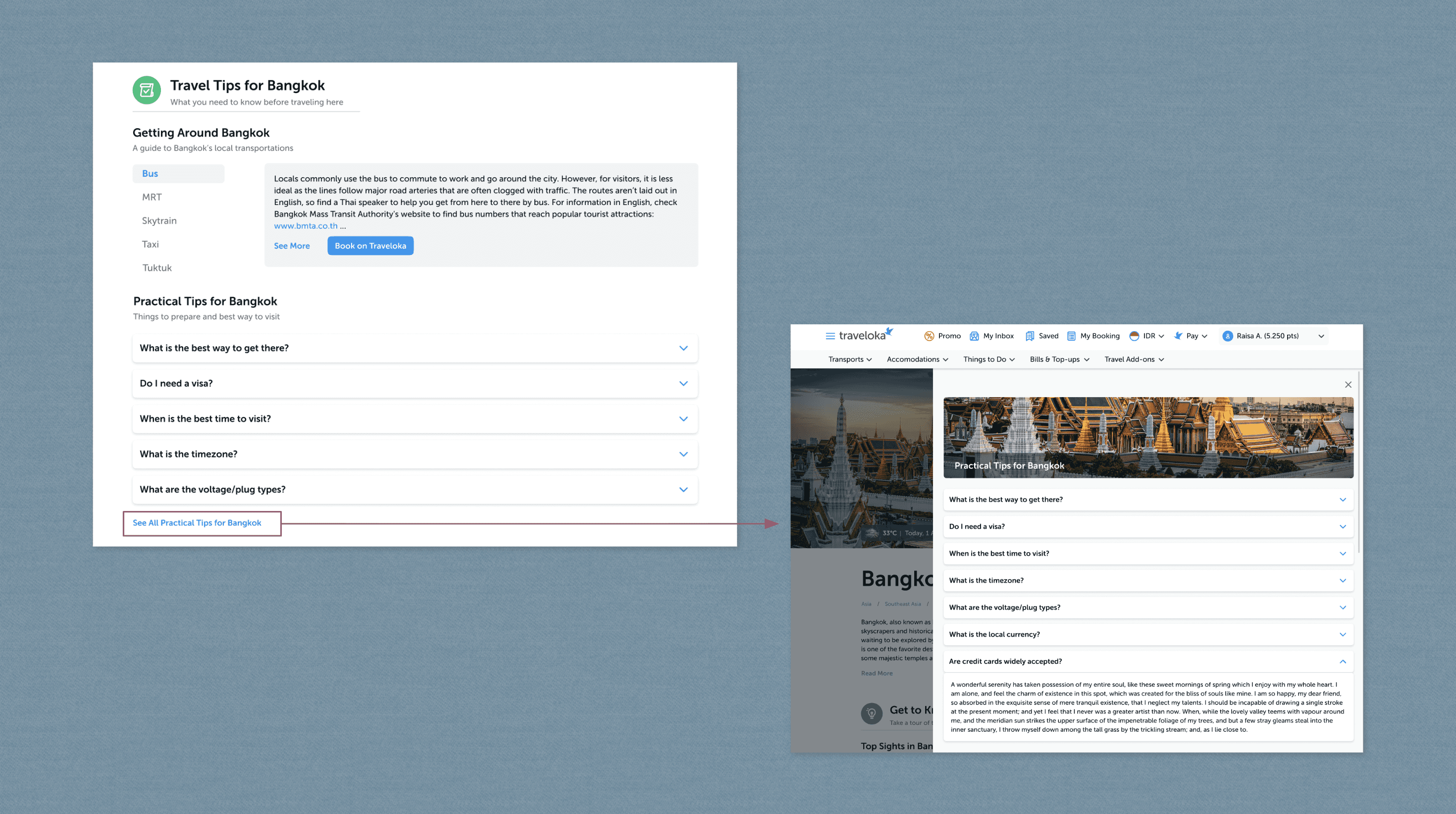
The practical tips component (collapsible, sidebar, separate page) needed multiple rounds of follow-up across design, SEO, and engineering. Component behavior decisions kept getting deferred because the team hadn't yet agreed on how to weigh SEO impact against technical effort as a shared criteria. We figured it out by the end, but it ate more sessions than it needed to.
WHAT THIS UNLOCKED
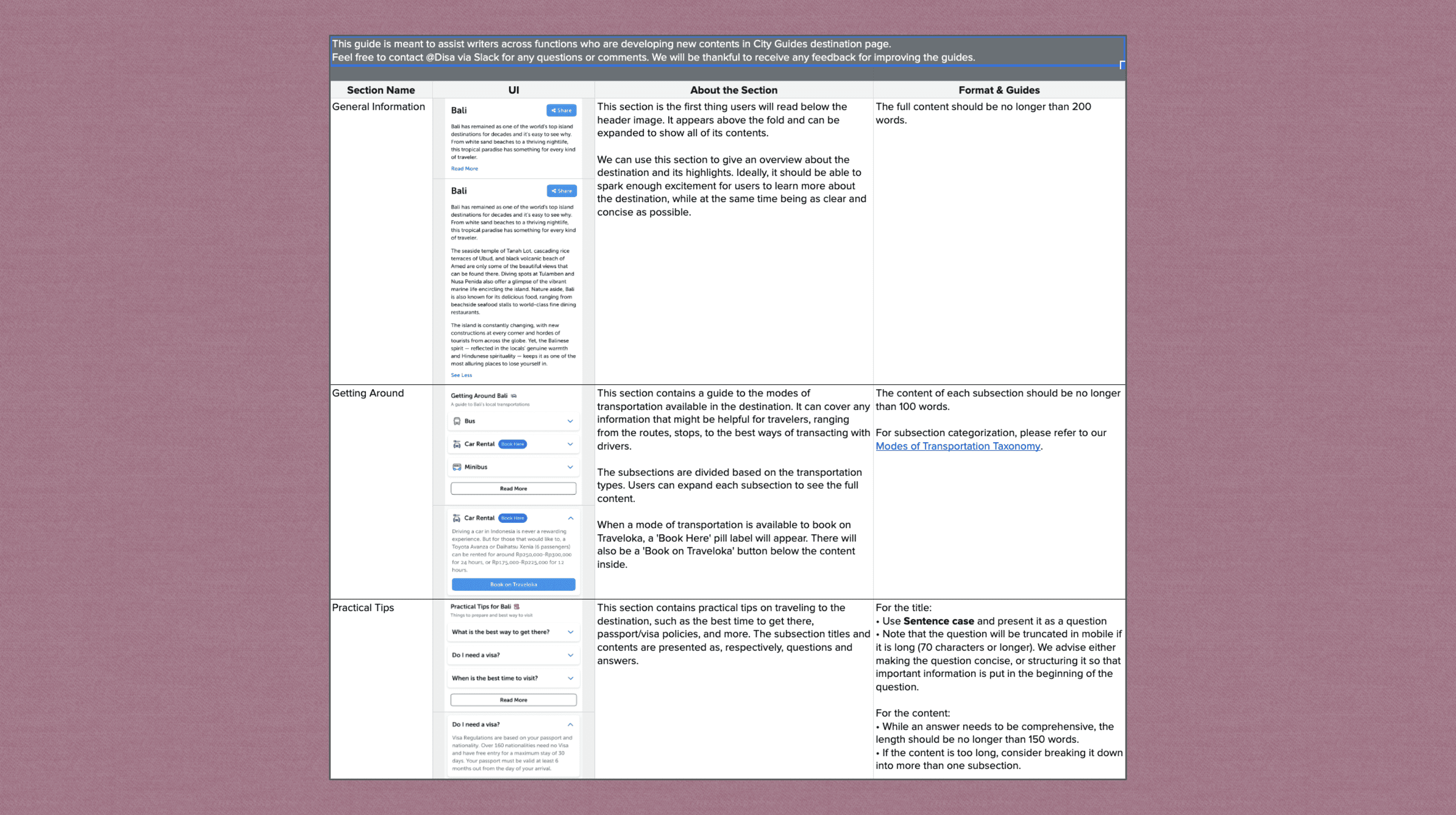
The content governance handoff outlived the project. Product copywriters stopped writing per-destination long-form, and the SEO team's writers picked up that load with the guideline as their north star.
The intent-ladder pattern (sequence the page to match how intent ripens) became a reusable frame for other content-heavy pages. It got picked up on at least one adjacent project after Travel Guides.
The cross-team practices that emerged became the loose template for how SEO-influenced design projects ran after this one. First time everyone in the room realized the trade-off they'd been treating as adversarial was mostly architectural.